


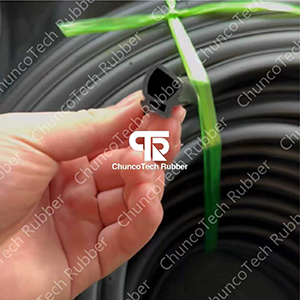


What Specifications Should Buyers Check When Purchasing Railway Rail Pads?

Quick Answer
When purchasing railway rail pads, buyers must verify six critical specifications: rail profile compatibility (UIC, BS, AREMA, or DIN standard), material type (rubber, EVA, HDPE, or composite), thickness and tolerances (typically 4–10mm depending on fastening system), stiffness and load-deflection characteristics, electrical resistance (for track circuit insulation), and compression set resistance (≤15–25% after accelerated testing). A rail pad that fits poorly or has incorrect stiffness compromises ride quality, accelerates sleeper damage, and shortens fastening system life. Field data shows pad selection errors can cause gauge widening of 6mm and require replacement every 18 months instead of the expected 8–10 years.
Key Takeaways
●Rail profile determines pad dimensions: UIC60, BS100A, and AREMA 115RE have different foot widths; pads are not interchangeable without verification.
●Thickness sets rail height and clip preload: Even 1–2mm variation causes track irregularity; thickness tolerance should be ±0.5mm.
●Compression set is the leading failure mode: Quality pads maintain ≤15% set after accelerated testing; low-grade pads exceed 25% within two years.
●Electrical resistance is non-negotiable for signaled tracks: Insulating pads require surface resistivity >10¹⁰–10¹² ohms, even when wet.
●Material selection follows operating conditions: Natural rubber for general use, EPDM for UV/ozone exposure, CR for oil resistance, HNBR for heavy-haul above 25-tonne axles
1. Understanding the Rail Pad’s Role in the Fastening System
A railway rail pad is a seemingly simple component with an outsized job. It sits between the rail foot and the sleeper or baseplate, performing four critical functions simultaneously: distributing wheel loads over a larger bearing area, damping vibration and shock, providing electrical insulation where track circuits are used, and protecting the sleeper surface from impact and abrasion.
1.1 Why Pad Selection Errors Are Costly
Field data consistently shows that premature pad degradation initiates a cascade of track problems. When a pad fails, the rail no longer sits properly on the sleeper. This causes accelerated rail corrugation, sleeper cracking at the rail seat, ballast breakdown, and rapid fastener loosening.
A metro operator case illustrates the consequence: pads replaced every 18 months due to compression set exceeding 25%, with gauge widening reaching 6mm. The root cause was not rubber compound quality—it was a pad selected by habit rather than by axle load, speed, and subgrade type.
2. The Six-Parameter Specification Framework
Buyers should verify six interdependent specifications before issuing any purchase order. Failure to address any one parameter creates a weak link that will determine pad service life regardless of the others.
2.1 Parameter One: Rail Profile and Standard Compliance
The pad footprint must match the rail foot width and the baseplate or sleeper shoulder geometry exactly. Rail sections follow different international standards, and each has distinct dimensions:
| Standard System | Common Profiles | Typical Foot Width | Geographic Use |
|---|---|---|---|
| UIC/EN | UIC54, UIC60, 60E1 | 150mm (UIC60) | Europe, global |
| BS | BS80A, BS90A, BS100A | 127–150mm | UK, Commonwealth |
| AREMA | 115RE, 132RE, 136RE | 140–152mm | North America |
| DIN | A45, A75, A100, A120 | Varies | Crane rail, industrial |
| Chinese | 50kg/m, 60kg/m, 75kg/m | Varies | China, international projects |
Critical rule: UIC60 and BS100A have different foot widths and radii. Pads for each section are normally cut to that section. Never assume interchangeability without checking the fastening system drawing.
2.2 Parameter Two: Material Type and Operating Temperature
Material selection should follow the operating environment and fastening system requirements, not cost alone. The global market uses several material families for rail pads:
| Material | Key Properties | Best Applications | Temperature Range | Relative Cost |
|---|---|---|---|---|
| Natural Rubber (NR) | High elasticity, fatigue resistance | General track, moderate conditions | -40°C to +70°C | Baseline |
| EPDM | Excellent UV/ozone resistance, electrical insulation | Outdoor exposure, signaling circuits | -40°C to +100°C | +15–25% |
| Chloroprene (CR) | Oil resistance, weathering balance | Moderate oil exposure, general mainline | -30°C to +100°C | +20–30% |
| Nitrile (NBR) | Oil and fuel resistance | Locomotive servicing areas, contaminated sites | -30°C to +100°C | +30–40% |
| HNBR | Exceptional heat and oil resistance | Heavy-haul >25t axles, high temperature | -30°C to +120°C | +80–120% |
| TPEE | Low permanent set, creep resistance | High-speed passenger, metro systems | -40°C to +120°C | +150–200% |
| EVA | Consistent insulation, light weight | Concrete sleepers, elastic fastening systems | -20°C to +60°C | Lower |
| HDPE | High hardness, low water absorption | Demanding industrial conditions | -20°C to +60°C | Lower |
For standard applications, natural rubber provides excellent elasticity and fatigue resistance. For areas with oil or fuel exposure, NBR is recommended. For outdoor exposure where ozone is a concern, EPDM or CR compounds resist cracking.
2.3 Parameter Three: Thickness and Dimensional Tolerances
Pad thickness is a functional dimension that defines rail height and the pre-compression of the fastening system. Too thick, and the rail sits high; the clip toe load changes. Too thin, and the system may not reach its designed clamping force.
Standard pad thickness ranges by sleeper type:
| Sleeper Type | Typical Pad Thickness | Rationale |
|---|---|---|
| PSC Concrete | 4–7mm | Standard elastic fastening systems |
| Wooden | 8–10mm | Compensates for wood surface irregularities |
| Steel | 6–10mm | Steel doesn‘t dampen like concrete; often specify high-elastic pads |
Tolerance is equally important. The pad should be held to ±0.5mm thickness tolerance across the batch. Variation beyond this creates track geometry irregularities, particularly on curves and switches.
2.4 Parameter Four: Stiffness and Load-Deflection Characteristics
Static pad stiffness (expressed in kN/mm) is one of the most overlooked yet critical parameters. It determines how the track responds to wheel loads and influences both ride quality and track geometry retention.
Stiffness selection guidance by track condition:
| Operating Demand | Recommended Stiffness | Rationale |
|---|---|---|
| Heavy-haul freight (25+ tonne axles) | Stiffer pads (~80–150 kN/mm) | Prevents excessive rail deflection |
| High-speed passenger (160+ km/h) | Moderate stiffness (~60–100 kN/mm) | Balances ride quality with geometry control |
| Urban transit (vibration-sensitive) | High-elastic pads (30–80 kN/mm) | Higher damping coefficients (0.3–0.5) |
Field data on stiffness effects: A reduction in rail pad stiffness from 90 to 60 kN/mm leads to a 55% decrease in corrugation amplitude and length. This demonstrates that stiffness selection directly affects rail surface degradation.
2.5 Parameter Five: Electrical Resistance (For Signaled Tracks)
Where track circuits are used, the pad must electrically insulate the rail from the grounded sleeper. Failure causes false occupancy alerts, wrong-side failures, and safety risks.
Electrical resistance requirements vary by standard:
| Standard | Test Condition | Minimum Requirement |
|---|---|---|
| RDSO (India) | Before/after water immersion | 100 Mega-ohms |
| ISO 2878 | Surface resistivity | Application-specific |
| Sri Lanka Railway | Surface test | Per Table 2 requirements |
| Signaling-grade (typical) | Wet surface | >10¹² ohms |
Why electrical failure occurs: Carbon black is added to rubber for strength, but it is conductive. Standard compounds contain enough carbon black to become conductive when wet or contaminated. High-resistivity EPDM compounds use minimum carbon black—just enough for durability, not enough for conductivity.
2.6 Parameter Six: Compression Set Resistance
Compression set is the leading cause of premature pad failure. When a pad takes a permanent set, it loses thickness and no longer provides adequate cushioning. The rail then pounds directly on the sleeper, causing cracks.
Compression set specifications from major standards:
| Standard | Test Condition | Maximum Allowable Set |
|---|---|---|
| RDSO (India) | 50% compression, 100°C, 24h | 30% |
| Sri Lanka Railway | 50% compression, 100°C, 22h | Per Table 1 |
| Quality benchmark | 50% compression, 100°C, 22h | ≤15% (premium) |
| Field failure threshold | Permanent thickness loss | >25% triggers replacement |
Field experience shows that quality pads maintain ≤15% compression set after accelerated testing, while low-grade pads exceed 25% within two years of service.
3. Documentation and Testing Verification
Buyers should require specific documentation before approving any rail pad supplier. The purchase process is about matching clearly defined parameters rather than picking a generic pad.
3.1 Required Documentation Checklist
●Drawing or datasheet showing pad dimensions, thickness, and tolerance
●Material certificate covering density, hardness, tensile strength, and elongation
●Compression set test report (ASTM D395 or ISO 815) with actual values
●Electrical resistance test values (if the pad is used in an insulated fastening system)
●Abrasion resistance data (ASTM G65 or equivalent)
●Sample approval: Order samples and check fit on actual rail foot and baseplate before mass production
3.2 Key Test Methods Reference
| Property | Test Method | What It Verifies |
|---|---|---|
| Hardness | ISO 48 / ASTM D2240 | Material consistency, typically 65–80 IRHD or Shore A |
| Tensile Strength | ISO 37 / ASTM D412 | Minimum ≥12.5 MPa before aging |
| Elongation at Break | ISO 37 | Minimum ≥250% before aging |
| Compression Set | ISO 815 / ASTM D395 | ≤25% (standard), ≤15% (premium) |
| Electrical Resistance | ISO 2878 / ASTM D257 | >10¹⁰–10¹² ohms for signaling circuits |
| Accelerated Aging | ISO 188 | Change in properties after 3 days at 100°C |
4. Pre-Order Verification Checklist
Before issuing a purchase order for railway rail pads, confirm the following:
Rail and Fastening System Compatibility
Rail profile identified by standard and section number (UIC60, BS100A, etc.)
Fastening system type documented (E-clip, Nabla, WJ-7, WJ-8, etc.)
Pad footprint verified against fastening system drawing
Material and Performance Specifications
Material type selected for operating environment (temperature, oil, UV exposure)
Thickness and tolerance confirmed (±0.5mm for critical applications)
Static stiffness range verified against track conditions
Compression set requirement specified (≤15% for premium applications)
Electrical resistance requirement confirmed (if signaled track)
Documentation and Quality Assurance
Material certificate requested with density, hardness, tensile strength
Compression set test report required with actual values
Electrical resistance test values required (if applicable)
Sample approval completed before mass production
Commercial and Logistics
Tracks ordered with sufficient quantity for maintenance spares
Installation torque specifications provided
Batch traceability documentation included
FAQ
1. What is the first thing to check when buying rail pads?
The rail section and its standard. The pad must match the rail foot width and the baseplate pocket. Everything else—material, stiffness, thickness—follows from the fastening system design.
2. Can the same pad be used for UIC60 and BS100A rail?
Only if the foot geometry and baseplate pocket are compatible. UIC60 and BS100A have different foot widths and radii, so pads for each section are normally cut to that section. Never assume interchangeability without checking drawings.
3. Why does pad thickness matter so much?
Because it defines the rail height and the preload of the fastening system. If the pad is too thick, the rail sits high and the clip toe load changes. If it is too thin, the system may not reach its designed clamping force. Thickness tolerance is part of the specification.
4. What compression set value indicates a quality rail pad?
Quality pads maintain ≤15% compression set after accelerated testing (50% compression, 100°C, 22–24 hours). Values above 25% indicate a pad that will fail prematurely in service.
5. Do I need insulating pads for every track?
Only where track circuits or signaling require the two rails to be electrically isolated. On non-signaled industrial or crane tracks, insulation may be unnecessary, which widens the material choice. For signaled tracks, specify pads with surface resistivity >10¹⁰–10¹² ohms even when wet.
6. What material is best for heavy-haul railway applications?
For axle loads above 25 tonnes, HNBR pads provide exceptional performance with permanent set typically below 8% after five years. CR pads are not recommended for extremely high axle loads. Fiber-reinforced compounds offer additional compressive strength for curves and high-stress areas.
7. How do I verify that a supplier’s rail pads meet specifications?
Require material certificates with density, hardness, tensile strength, and elongation values. Request compression set test reports (ISO 815 or ASTM D395) with actual measured values. For electrical applications, obtain electrical resistance test data per ISO 2878 or ASTM D257. Order samples and verify fit on actual rail foot and baseplate before mass production