


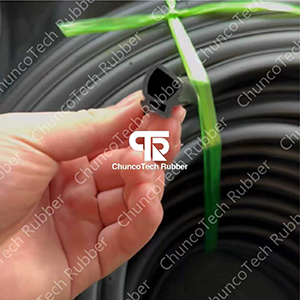


Why Do Rubber Dust Covers Crack Prematurely in Engine Compartments? How Wuxi ChuncoTech Rubber Protects Ball Joints and Tie Rods
Why do rubber tires flat-spot while parked? How Wuxi ChuncoTech Rubber reduces permanent deformation. In our last article, we helped vehicle owners understand compression set in tires during storage. Today, we address a frustration familiar to every mechanic and vehicle owner: rubber dust covers (also called rubber boots or protective dust shields) that crack after just a few years in the engine compartment. If you have ever asked “why do my CV boots or tie rod covers keep cracking,” you have observed the destructive effects of ozone, heat, and flexing on standard rubber. Dust covers protect ball joints, tie rod ends, CV joints, and steering linkages from dirt, water, and debris. When they crack, contaminants enter, grease leaks out, and the joint fails prematurely. At Wuxi ChuncoTech Rubber, we manufacture ozone-resistant rubber dust covers using EPDM and chloroprene compounds specifically formulated for under-hood conditions. Here is what causes premature cracking—and how our covers last longer.
The Dust Cover Challenge: Heat, Ozone, and Constant Flexing
Engine compartments are hostile environments for rubber:
-
Ozone: Electric motors and generators produce ozone, which attacks natural rubber and NBR.
-
Heat: Under-hood temperatures regularly reach 100°C, accelerating aging.
-
Constant flexing: Every steering movement flexes tie rod boots; every suspension cycle flexes ball joint covers.
-
Oil and chemical exposure: Power steering fluid, engine oil, and road salt attack rubber.
Why do standard dust covers crack?
-
Ozone attack: Natural rubber and NBR are not ozone-resistant. Cracks appear at flex points within 2–3 years.
-
Heat hardening: Sustained heat crosslinks rubber polymers, making them stiff and crack-prone.
-
Flex fatigue: Millions of flex cycles cause micro-cracks that grow over time.
-
Wrong material specification: Many aftermarket boots use low-cost SBR or recycled rubber—they fail quickly.

How Wuxi ChuncoTech Rubber Prevents Premature Cracking
Ozone-resistant EPDM and chloroprene (CR) : We use EPDM for maximum ozone resistance—it is immune to ozone cracking. For applications requiring oil resistance (engine mounts, steering components), we use chloroprene (CR) which balances oil and ozone resistance.
Heat-stabilized formulations: Our compounds include antioxidants and heat stabilizers that prevent hardening at sustained temperatures up to 120°C.
Optimized rib design: The ribs on a dust cover are not cosmetic—they control flexing. Our FEA-optimized rib geometry distributes stress evenly, eliminating stress concentration points where cracks typically start.
Tear-resistant compounds: Even if a crack initiates, our high-tear-strength compounds (exceeding 35 kN/m) stop crack propagation.
Real-World Result: Tie Rod Boots Last 8 Years
A fleet of delivery trucks was replacing tie rod boots every 2 years. The boots cracked, allowing dirt to enter and destroying the tie rod ends. The fleet switched to Wuxi ChuncoTech Rubber EPDM boots with ozone-resistant compound and optimized rib design. After 8 years of service, no cracks were visible. The fleet saved over $20,000 annually in steering component replacements.
Your Ozone-Resistant Dust Cover Partner
Wuxi ChuncoTech Rubber manufactures rubber dust covers for ball joints, tie rods, CV joints, steering linkages, and hydraulic cylinders. We offer EPDM (maximum ozone resistance, for non-oil applications), chloroprene (CR) (ozone + oil resistance), heat-stabilized formulations (120°C continuous), optimized rib designs for stress distribution, and tear-resistant compounds (>35 kN/m). As part of our automotive rubber parts division, we provide custom covers for any joint size. Our truck rubber parts portfolio also includes heavy-duty boots for commercial vehicles.
Visit our website at https://www.chuncotechrubber.com/ to request a dust cover consultation or to order samples.