


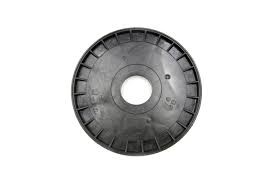


Factory Real Photos

Product Features
1. Outer Rubber Layer: Contact vacuum-atmosphere alternating chamber; provide sealing, ozone & heat aging resistance.
2. Fabric Reinforcement Interlayer: Nylon / Polyester woven fabric (NTX60 / NTX90 grade). RFL dipping pre-treatment for chemical bonding with rubber; restrains stretch, improves tear-resistance & fatigue performance under millions-time flexing.
3. Inner Rubber Layer: Working-side elastomer layer, ensure smooth flexible deflection under pressure difference.
4. Outer Sealing Lip: Double-lip sealing geometry, forms circumferential seal against booster housing; prevent vacuum leakage.
Vacuum / Airtightness|Vacuum Leak Test
Bench test reference QC/T 3071999, SAE J03012011
Test Item |
Test Condition |
Acceptance Criteria |
Working Vacuum Range |
−0.4 bar ~ −0.8 bar |
Stable diaphragm deflection, no collapse |
Max Allowable Differential Pressure |
−0.9 bar |
No permanent deformation |
Burst Pressure |
Positive pressure loading |
≥ 8 bar, no rupture / blow-out |
Vacuum Leak Rate |
−66.7 kPa vacuum, stable 15 s |
Pressure rise ≤0.2 kPa /15 s,no visible leak |
Fatigue|Fatigue Cycle Test
Test reference condition: Cyclic differential pressure −0.8 bar, frequency 60 cycles/min, temperature cycling −40 ℃ ~ +120 ℃
Item |
Requirement |
Valid Fatigue Cycles |
≥ 1 000 000 cycles |
Post-test Inspection |
No rubber cracking; No fabric-rubber delamination; No pinhole perforation; Vacuum leak still meets acceptance criteria |
Expected Service Life |
510 years under normal automotive operating environment |
Material Test
Material Grade |
Hardness |
Operating Temp. |
Ozone Resistance |
Oil / Brake-fluid Compatibility |
Application |
EPDM (Recommended) |
60 ±5 |
−40 ℃ ~ +120 ℃ |
Excellent |
Good resistance to brake fluid |
Passenger car, light commercial vehicle |
NBR |
65 ±5 |
−30 ℃ ~ +100 ℃ |
Fair |
Excellent oil-resistance |
Machinery with oil mist environment |
Silicone |
55 ±5 |
−55 ℃ ~ +150 ℃ |
Outstanding |
Poor for mineral-oil |
Special high-low-temp customized unit |
Ozone aging test:50 pphm, 40 ℃,720 h, no surface crack. | |||||
Product Specifications


Parameter |
Typical Range |
Tolerance |
Remarks |
Outer Diameter (OD) |
180 ~ 320 mm |
±0.8 mm |
Match booster shell inner cavity |
Inner Bore Diameter (ID) |
35 ~ 65 mm |
±0.5 mm |
Match diaphragm-plate hub |
Nominal Thickness |
0.5 ~ 0.7 mm |
±0.05 mm |
NTX60:0.5mm; |
Sealing Lip Width |
8 ~ 14 mm |
±0.4 mm |
Double-lip profile |
Note: Custom OD / ID / thickness available for non-standard booster housing. | |||
Advantages
1. Enhanced braking safety
Reliable force amplification ensures shorter stopping distances
2. Durable performance
Resists cracking, aging, and deformation under millions of working cycles
3. Low maintenance
Sealing integrity reduces vacuum leakage and system failure risks
Manufacturing Standards

FAQ
-
1.What materials are available for vacuum booster diaphragms?
-
2. How do I know if my diaphragm needs replacement?
-
3. Can you produce custom sizes?
-
4. What is the typical service life?
Under normal operating conditions, a high-quality diaphragm can last 500,000 to 1,000,000 brake cycles or 5–10 years, depending on material and usage environment.
GET IN TOUCH
Please fill in your question and we will reply you as soon as possible.
description2